Application number 100 feels different from application number 1. The first one you wrote carefully, read twice and sent with real hope. By the hundredth you are copying, pasting and clicking submit before the page finishes loading, mostly so you can say you did something today.
Then the replies come in. "We have decided to move forward with other candidates." Sometimes within an hour, which means nobody read it at all. Most of the time, nothing comes back.
If that is where you are right now, take a breath. We have reviewed thousands of job searches at Placix, and the pattern is remarkably consistent: the system rejecting you is relevance-based, not volume-based. Sending more of the same signal just produces more of the same silence.
The math that makes job boards so brutal
A well-known company posts a mid-level software or data role. Within the first day or two, hundreds of applications arrive, sometimes thousands for remote positions. A recruiter juggling many open roles cannot read them all, so they search, filter and skim.
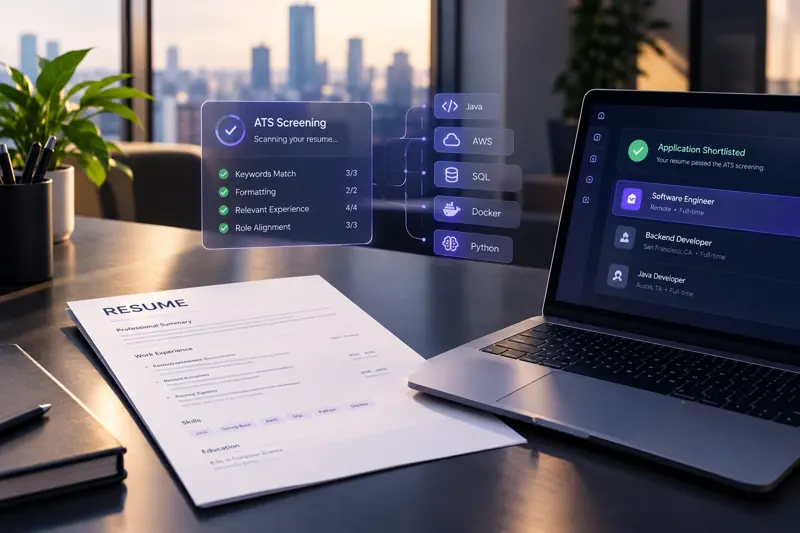
That means your resume competes in two rounds you never see. First, does it show up when the recruiter searches the applicant tracking system for the skills they need? Second, when they open it, does the top third convince them in a few seconds that you are worth a call? Miss either one and the hundred applications behave like zero.
Seven reasons your applications go quiet
1. One resume trying to fit every role
A resume written for "data analyst, data scientist, business analyst, or anything with data" convinces no one. Recruiters hire for a specific job. If they cannot see that job in your first lines, they move on.
2. Keywords that do not match the posting
If the description says "Power BI" and "stakeholder reporting" and your resume says "dashboards" and "presentations," you might be perfectly qualified and still invisible to a keyword search. Our guide to ATS resume screening explains how matching actually works.
3. Duties instead of results
"Responsible for testing" describes a job. "Cut regression testing time by 40% by automating 220 test cases in Selenium" describes a person someone wants to hire. Numbers are the shortcut a skimming recruiter needs.
4. Knockout questions you are answering on autopilot
Years of experience, location, work authorization and salary questions can reject an application automatically. If you answer them without reading carefully, you may be filtering yourself out of roles you are qualified for.
5. Applying too late
Postings get most of their serious review in the first few days. Applying two weeks later is often like arriving after the meeting ended. Fresh roles deserve priority.
6. Being invisible outside the portal
A LinkedIn profile with a vague headline, no recent activity and a missing "Open to work" signal for recruiters gives sourcers nothing to find. Many interviews start with a recruiter search, not an application.
7. No referral, no conversation, no follow-up
Referred candidates are far more likely to get interviews than cold applicants. A short note to a recruiter after applying, or a conversation with someone on the team, moves you from a pile into a person's memory.
More applications fix an effort problem. Most job seekers do not have an effort problem. They have a targeting problem.
What actually works instead
The shift is simple to describe and takes discipline to do: fewer applications, each one sharper, with a human touch attached.
- Pick one or two job families. Decide what you are, at least for the next 60 days. Everything else follows from this.
- Write a master resume for each family. Then tailor the top summary and the first three bullets for every application that really matters.
- Apply early. Set alerts and aim to apply within 72 hours of a posting going live.
- Attach a person to every strong application. A recruiter, a hiring manager, an alum, a former colleague. One message is enough.
- Track everything. Role, date, contact, follow-up date, status. A simple spreadsheet turns chaos into a pipeline.
- Review your numbers every two weeks. If you have applications but no screens, fix the resume. Screens but no second rounds, fix your story. Final rounds but no offers, fix interview prep.
Response rate under 2% on tailored applications usually points to the resume or targeting. Screens that stall usually point to how you explain your experience. Knowing which stage leaks tells you exactly what to fix.
A story we see often
Picture a backend engineer, four years in, applying to around 60 roles a week. Generic resume, no referrals, mostly roles posted more than a week earlier. Two months in, the scoreboard reads: zero interviews.
Now picture the same engineer after a reset. Twelve target companies. A resume rewritten around three numbers that actually mattered in their work. Applications sent within two days of posting, each followed by a short note to the recruiter. Within three weeks, five screens. Not because they suddenly became more talented, but because the right people could finally see the talent that was already there.
That reset is exactly what the Placix Tech process is built to do, from profile optimization to direct submissions through our recruiter and vendor network.
When it is not you, it is the market
Some seasons are slower. Some fields tighten. If you are international, work authorization adds another layer, which we cover in how to get a job in the USA on OPT. A slow market is a reason to be more precise, not a verdict on your worth.
Protect your energy while you are at it. Block time for applications, time for networking, time for learning and time for nothing at all. A job search run like a project is far more sustainable than one run on panic.
 How Placix helps
From silence to scheduled interviews
Placix rebuilds your resume and LinkedIn for the roles you want, submits your profile to recruiters, hiring managers and a trusted vendor network, and coaches you round by round until the offer arrives.
Book a free consultationThe bottom line
If 100 applications produced no interviews, the 101st sent the same way will not either. Narrow your focus, sharpen your resume, apply early and put a human in the loop. The interviews follow the relevance.
And if you want help finding the leak in your search, you can browse open roles or talk to the Placix team directly.