The EAD card usually arrives on an ordinary weekday. You open the envelope, see your photo on a plastic card, and for about ten minutes it feels like the hard part is over. Then you do the math. Ninety days of unemployment allowed. Rent due on the first. A degree that cost more than your parents' house.
We hear some version of that story almost every week at Placix. A data science graduate with a 3.8 GPA, two strong projects and zero callbacks after three hundred applications. A mechanical engineer who keeps reaching final rounds and losing out to "a candidate with more experience." A nurse educated abroad who has no idea which hospitals will even look at her profile.
None of them lack talent. What they lack is a search built around how OPT actually works. This guide is that plan, written the way we would explain it to you over coffee.
First, understand the clock you are working against
Post-completion OPT gives most F-1 graduates up to 12 months of work authorization in their field of study. During that initial period you can accumulate up to 90 days of unemployment. If you qualify for the 24-month STEM OPT extension, you get an additional 60 days, for a total of 150 across the full OPT period.
Those days start counting from the start date on your EAD, not from the day you begin applying. That single detail changes everything about timing. Students who start their search in the final semester walk into OPT with interviews already scheduled. Students who wait for the card often spend a third of their unemployment allowance just getting their resume ready.
Rules around OPT, STEM OPT and H-1B change, and your situation is specific to you. Placix provides career and employment support, not legal or immigration advice, so confirm details with your school's DSO or an immigration attorney.
Why smart graduates still struggle to land OPT jobs
Most international students do exactly what they were told: polish the resume, open LinkedIn, and hit "Easy Apply" until their thumb hurts. The problem is that this approach treats every job posting as equal, and for someone on OPT they are not.
- Many postings quietly filter out sponsorship. A knockout question like "Will you now or in the future require sponsorship?" can end an application before a human ever sees it.
- Volume hides a relevance problem. Sending the same resume to a data analyst role and a machine learning role tells both recruiters you are not quite either.
- Job boards are the most crowded door. A single remote posting can draw thousands of applicants within a day. Referrals and recruiter conversations are far less crowded.
- STEM OPT has employer requirements. To support a STEM extension, your employer must be enrolled in E-Verify and sign a training plan (Form I-983). Not every company is set up for that.
If any of this sounds familiar, you are not failing. You are playing a game whose rules nobody explained. We wrote more about this in why 100 applications often produce zero interviews.
Target employers who already hire international talent
The fastest way to improve your odds is to stop applying where the answer is almost always no. Build a target list of 60 to 100 companies with a proven history of hiring and sponsoring international graduates.
Where to look
- Public H-1B and PERM filing data. Employers that filed petitions for your job title in recent years have the process, the lawyers and the appetite to do it again.
- E-Verify participants. If you are in a STEM field, this is a must for your extension. Ask early and politely during recruiter screens.
- Mid-size firms and consultancies. Large tech brands get the attention, but mid-size product companies, healthcare systems, banks and IT services firms often hire OPT candidates more readily.
- Cap-exempt employers. Universities, affiliated nonprofits and some research organizations can sponsor H-1B outside the annual lottery cap.
Once you have the list, every application, networking message and follow-up should point at it. Focus beats volume.

Build a resume that survives the first six seconds
Recruiters skim. Applicant tracking systems parse. Your resume has to work for both. For OPT candidates, a few changes make an outsized difference:
- Lead with US-relevant impact. Translate academic projects into business outcomes. "Built a churn model" becomes "Built a churn model that flagged 18% of at-risk customers in a 50,000-row telecom dataset."
- Mirror the language of the role. If the posting says "stakeholder management" and "SQL," those exact words should appear where they are true for you.
- One resume per job family. Keep separate versions for, say, data analyst, data engineer and BI developer roles.
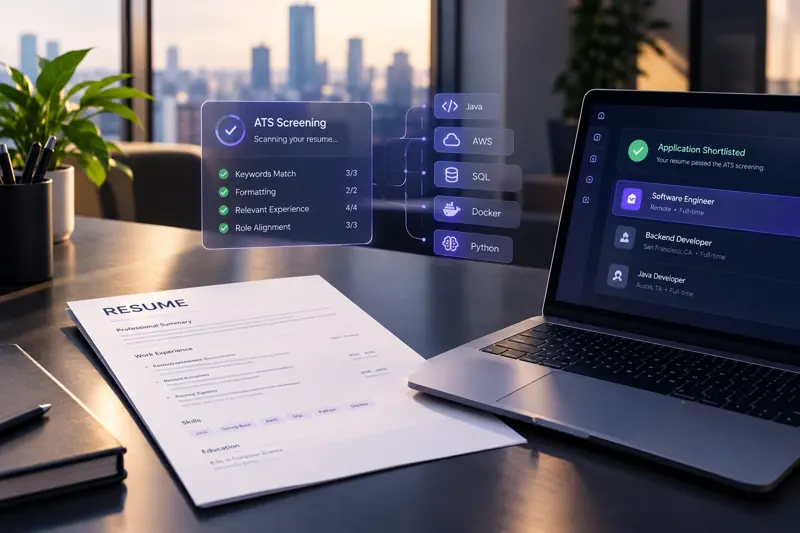
- Keep the format plain. Single column, standard headings, no text inside images or tables. Our ATS resume guide walks through this in detail.
At Placix Tech, resume optimization is usually where we start, because every other effort depends on it. A strong referral pointing at a weak resume still goes nowhere.
Get in front of people, not just portals
Here is the uncomfortable truth: a large share of good roles are filled through referrals, recruiter outreach and vendor networks long before a posting gets popular. For international candidates, that hidden market matters even more, because a human conversation is where sponsorship questions get a fair hearing.
A simple weekly rhythm
- Message five alumni from your university working at target companies. Ask for fifteen minutes of advice, not a job.
- Connect with two or three technical recruiters who specialize in your field and keep them updated every couple of weeks.
- Comment thoughtfully on posts from hiring managers in your space. Visibility compounds quietly.
- Follow up on every application that matters within five business days.
The candidates who land fastest are rarely the ones who apply the most. They are the ones who are remembered by name.
What about unpaid roles and protecting your OPT days?
When the clock gets tight, some graduates take an unpaid or volunteer role directly related to their degree, typically at least 20 hours a week, to stay in valid status during initial post-completion OPT. Done properly, this can buy time while the search for a paid role continues.
Be careful here. The role must genuinely relate to your field, you need documentation, and the rules differ for STEM OPT, where employment must be paid and meet E-Verify and training plan requirements. Talk to your DSO before you accept anything. Through our OPT and STEM OPT support, Placix helps candidates identify eligible opportunities and plan the next step, while the legal decisions stay with you and your school.
Prepare for interviews the way US hiring managers run them
Plenty of international graduates clear technical screens and stumble on the behavioral round. US interviewers often look for ownership, clear communication and specific stories told with structure.
- Prepare six to eight stories using the STAR method: situation, task, action, result.
- Practice explaining your work to a non-technical listener in under two minutes.
- Have a calm, honest answer ready for sponsorship questions. "I'm on OPT with STEM eligibility, which gives you up to three years before any H-1B is needed" is a strong, factual framing for STEM graduates.
- Do at least two full mock interviews in the company's actual format before the real thing.
 How Placix helps
A search plan built around your OPT dates
Resume and LinkedIn optimization, direct submissions to recruiters and hiring managers, mock interviews modeled on each company, and offer negotiation support. One team, one plan, from your first call to your first day.
Book a free consultationA realistic 90-day OPT job search plan
| Window | Focus | Goal |
|---|---|---|
| Before your EAD start date | Target list, resumes per job family, LinkedIn refresh | Applications and conversations already in motion |
| Days 1 to 30 | 15 to 25 tailored applications a week, plus networking | First recruiter screens booked |
| Days 31 to 60 | Interview prep, follow-ups, widen to adjacent roles | Multiple processes at final stages |
| Days 61 to 90 | Close offers, evaluate fit, protect status if needed | Signed offer, I-983 started if STEM |
Want to see the kind of roles our candidates pursue? Browse current open roles across the US.
The bottom line
Getting a job in the USA on OPT is not a lottery, even when it feels like one. It rewards preparation that starts early, applications aimed at employers who can actually hire you, and conversations with real people. You bring the talent. A clear plan does the rest.
If you would like a second set of eyes on that plan, the Placix team is one message away.